
Bad odors in the food industry vary in type and strength, since they can be created during production, processing, and wastewater treatment. Regardless of the source, odors may be offensive to the public and employees.
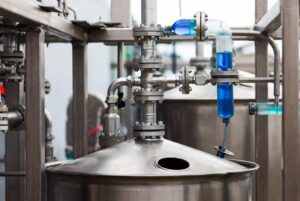
Some food processing facilities have their own wastewater treatment plant with lagoons of smelly fats and greases. Sludge made during water clarification may also cause odors. Even pleasant-smelling food odors — like those from spices or sweets — may become offensive over time.
Product Use:
Regulations and guidelines prevent materials from coming into contact with food products. Uses are often located in exhaust stacks and vents, near dryers, around wastewater, and culture processing. Vaporization systems are effective in these and other areas, and custom systems and blends can be developed for special applications.
Liquid Food Waste:
Liquid food waste, such as fats, oils, and grease (F.O.G.), can emit unpleasant odors. These odors get worse throughout the stages of processing. Bad smelling F.O.G. from restaurants are often transported by truck to filtering facilities and then to plants where they are processed into useful byproducts.
In the past, these odors have been nearly impossible to eliminate due to the molecular structure of long-chain fatty acids. Acids from fats block traditional odor control products from getting to and neutralizing odor molecules. Transport trucks, grease processing facilities, and rendering plants often resort to masking odors. There is a developed better solution.
Products specifically designed to eliminate, not mask, organic and inorganic malodors caused by long-chain fatty acids.
Transport Trucks:
While loading and unloading grease collection trucks, potent odors can escape into the atmosphere. Using natural products allows you to remove odors before they offend residents and businesses in surrounding areas.
Grease Processing Facilities:
When restaurants send their F.O.G. to grease processing facilities odors come, too. Products eliminate these odors on contact.
Rendering Plants:
Rendering animal byproducts into useful materials such as lard or tallow can also produce hard-to-eliminate odors. Products have been specially formulated to break down the acids and neutralize odors emitted during the rendering process.
How to Use:
Because of the nature of long-chain fatty acids, products must be delivered from atomization systems with water. These systems can be paired with fans or distributed from pipes and nozzles where odors are strong.
Meat and Seafood Processing:
Meat and seafood processing and rendering plants have a hard time controlling bad odors, because they occur naturally when organic material is transported or stored. From farm or sea to processing to rendering, the handling of meat and seafood through different facilities can create big odor issues.
Engineers have developed solutions to eliminate these common odors through wastewater treatment, solid waste treatment, air scrubbing, and direct injection to stacks. Applying products through hollow-bladed fans can provide pinpoint odor control.
Fish Meal Processing:
Manufacturing dry fish food blends barley, soybeans, and fish oil – a process that can generate strong odors. Control smells with a feed system using a flue, plenum, and multiple nozzles to deliver product, quickly and efficiently.
“Pleasant” Smells:
Even otherwise enjoyable odors can become a nuisance over time and at high concentrations. An artificial flavoring plant manufactures a variety of strong flavors, causing a range of odor problems. One system can be used to vary dilution rate and volume injected to the process stack.
The sterilization process used in chocolate factories releases volatile gases into water, creating foul odors. A product quickly and effectively neutralizes those smells.
Food Processing Plants:
Wastewater is a natural byproduct of food processing facilities. Not only do facility owners have to be concerned with controlling odors from processed food, but also all the odors that are associated with wastewater. Odor control products for wastewater are approved for use outside of food processing plants and are environmentally-friendly.