
Controlling styrene vapors from FRP Fabrication and plastic/rubber manufacturing.
Styrene Vapors
Many resins used in the composite industry emit styrene vapors, considered hazardous in high concentrations and a source of unpleasant odors. This gas is categorized as a volatile organic compound (VOC) and listed by the Environmental Protection Agency as a Hazardous Air Pollutant (HAP). Styrene is considered highly reactive in the atmosphere and may contribute to smog formation and the production of secondary air pollutants.
A formulation was developed specifically for use by manufacturers in the growing styrene market. The formulation is an environmentally-friendly plastic and rubber odor control solution for controlling styrene odors created during manufacturing. It boosts the solubility of styrene so that airborne odor molecules can be neutralized. Laboratory tests prove that it reacts with dissolved styrene and reduces it by 98% within 20 minutes.
FRP Fabrication
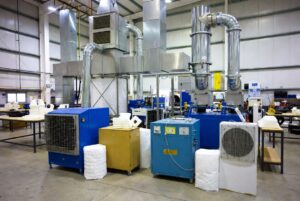
Fiberglass-reinforced products (FRP) fabrication presents many uses for odor management solutions. FRP fabrication does allow the use of added water, requiring an experienced system engineer. Where spray booths are used, air exhaust systems provide a plenum and exhaust stack into which atomization nozzles can be used to treat exhausting air for indoor plastic and rubber odor control treatment.
How to Use
Products are your best defense against unwanted exhaust smells. Vaporized or atomized products can be used to combat odors in the atmosphere. For end-product odor control, additives can be mixed in to neutralize odors connected with phenolic resins and many other odor-causing materials. There are also products that can be added into the plastics that are used in consumer good packaging.
Odor Sources
-
Pharmaceutical production
-
Polymers
-
Cleaners
-
Packaging
-
Household products
-
Resins
-
Adhesives
-
Paints and varnish coatings
-
Wastewater and exhaust
Plastic & Polymer Packaging
Bad odors can embed themselves in plastic packaging, causing consumer complaints, loss of sales, or expensive recalls. Additives can be mixed into the polymer manufacturing process to remove odors, without affecting the end product.
Methods of Tackling the Challenges
While traditional waste and odour management and control methods are near-perfect, the use of harsh chemicals deployed in this option can compromise the health of both individuals and the community at large. The environment is the greatest loser here as the effect of poisonous chemicals are emitted uncontrollably into the atmosphere.
As such, a growing number of countries of the developed world are turning towards organic odour and infectious diseases control methods. These are effective, safe, and eco-friendly solutions which keep the homes and environment clean, deodorized and infection-free through the use of naturally sourced substances and methods that are harmless to humans and pets but are lethal for dangerous bacteria and pests.
Advantages of Organic Waste Management, Odour and Infection Control Methods:
Safety: One of the most compelling reasons to opt for organic odour and waste management and control method is its safety aspect. Traditional odour and infection control methods employ synthetic chemicals and fragrances that can harm humans and pets. On the other hand, organic methods pose little or no health risks to human beings. Children and the aged in the society who are more vulnerable to the harmful effects of the traditional chemical-based odour control and waste management methods due to their developing and depreciating immune systems respectively, are significantly safer with organic alternatives.
Eco-Friendly Approach to Environment: Organic odour and waste management and control methods are not just beneficial for the homes but also for the larger environment. Chemical-based fragrances and pesticides can seep into the soil, water, and air, causing extensive environmental damage. They can harm non-target organisms like birds, bees, and beneficial insects, thereby disrupting the delicate balance of our ecosystems but in stark contrast, the organic odour and waste control option promotes bio-diversity and helps in maintaining ecological balance. This sustainable approach safeguards the health of our planet for future generations.
Core Principles
The core principles of plant-based odor control focus on eliminating malodors at the molecular level, not just masking them with fragrances. This is achieved through a combination of physical and chemical mechanisms using plant-derived formulations, primarily essential oils and organic micronutrients.
The key principles are:
Molecular Binding (Adsorption and Absorption): Plant-based formulas contain specific active compounds that physically bind to the surface of odor molecules (adsorption) and then encapsulate or dissolve them within atomized liquid droplets (absorption). This prevents the odor molecules from reaching human olfactory receptors.
Chemical Neutralization: Direct chemical reactions occur between the functional groups in plant essential oils and the malodorous compounds (such as hydrogen sulfide, ammonia, and mercaptans). This reaction transforms the odorous substance into non-volatile, odorless compounds, permanently deactivating the smell.
Solubility Enhancement: Plant-based solutions, often applied as water emulsions with bio-based surfactants, significantly increase the solubility of odorous gases in the liquid phase. This allows the odorants to be effectively captured and treated within the water droplets.
Biological Degradation Support: In some applications, plant-based products, such as those containing enzymes or micronutrients, stimulate beneficial microbial activity to break down the underlying organic matter causing the odors. This addresses the root source of the odor rather than just the airborne molecules.
Prevention at the Source: The most effective strategy involves preventing the production of odorous compounds in the first place, often by applying the plant-based solutions directly to the source material (e.g., sludge, waste piles) to block odors from escaping or inhibiting the conditions that create them.
These principles result in non-toxic, environmentally friendly, and safe solutions that provide a complete and lasting elimination of odors across various industrial and commercial environments.
Key Action Statements
The key action statement for plant-based odour control is to eliminate malodours at the source by utilizing natural, non-toxic formulations that neutralize and break down odour-causing organic matter and chemical compounds. This approach provides a safe, effective, and environmentally sustainable alternative to traditional chemical masking agents.
Key Action Principles
Source Elimination, Not Masking: Plant-based solutions work through multiple mechanisms, including absorption, adsorption, and chemical reactions with malodorous molecules, converting them into non-odorous, non-volatile substances. They do not merely cover up smells with fragrances.
Biological Stimulation: Certain plant-based micronutrient solutions stimulate the metabolic rates of beneficial microorganisms, which then outcompete odour-producing bacteria for food sources. This process of competitive inhibition prevents the generation of odours like hydrogen sulfide (H₂S) and ammonia (NH₃) from organic waste streams.
Safety and Sustainability: These technologies are non-hazardous, non-toxic, and biodegradable, ensuring safety for employees, communities, and the environment. They offer a near-zero carbon footprint solution compared to the high energy demands of conventional odour control methods like incineration or aeration.
Versatile Application: Plant-based formulations can be applied in various ways depending on the source and environment, including atomized misting or vapor phase systems for airborne odours, or direct injection into liquid and solid waste streams.
Benefits of this Approach
Improved Air Quality: Achieves genuine odour elimination, leading to a more pleasant working environment and fewer complaints from nearby residents.
Regulatory Compliance: Helps facilities meet environmental regulations and avoid fines by proactively managing odour emissions.
Cost Efficiency: Often results in lower operating costs and reduced maintenance requirements compared to chemical-intensive methods.
Tests prove it works … and safely
ODORS ELIMINATED 98.7%
SAFE INGREDIENTS 100%
Independent olfactory field and lab gas tests found that it works to eliminate odors using safer ingredients.
How to Get Rid of Everyday Industrial Odors
NATURAL CHEMISTRY
From-nature ingredients means safer for your staff and neighbors.
It relies on the power of natural plant oils to absorb and neutralize odor molecules. This Odor Absorption Technology has been perfected over more than three decades.
In most cases, formulations are vaporized (no water needed) and sprayed into the air near or around odor sources. Deodorizing additives can also be mixed into odorous end-products.
-
Natural approaches can get easier buy-in and positive press
-
Additives do not change qualities of products
-
No costly disposal of toxic chemicals
-
No harmful emissions released into the air
-
No masking agents, which just make smells worse
It is the green solution for industrial odor control.
Products use natural ingredients to eliminate industrial smells without the need for harsh chemicals or masking fragrances. Highly versatile and proven effective, odor control products offer a complete solution, eliminating the need for multiple solutions.
-
Effective for both organic and inorganic odors
-
Safe for humans
-
Safe for animals
-
Safe for the environment
-
Nontoxic
-
Custom engineered solutions when needed
-
We don’t mask odors; we eliminate odors.
You know the smells: orange citrus, cherry bomb, rose petal; they’re commonly used fragrances others use to “hide” industrial odors. Much of the time, these masking fragrances don’t work to control odors. And if they do, it’s a short-term solution at best. Once the fragrance wears away, the malodor returns. What’s worse, despite the pleasant names, most masking fragrances are anything but natural.
Products are just the opposite. They don’t mask industrial odors. They react on a molecular level to neutralize them. And products don’t rely on chemicals.
Fast and effective.
While amazingly effective, the principles by which odor neutralizers work are rather straightforward. The fundamental mechanisms involved are adsorption, absorption, gas solubility and reaction. When diluted with water and broadcast via atomization, the tiny water droplets created contain a thin oil skin that creates an electrostatic charge. This charge facilitates adsorption of the malodor molecules onto the droplet surface. The gas is absorbed by the droplet (solubility) and held.
Scientifically proven. Perfectly safe.
The odor destroying powers of products are supported by extensive research conducted by independent laboratories, universities, and olfactometry researchers. They have proven their safety and effectiveness – something that sets products apart from other odor control products. Independent firms, both domestic and international, were used to ensure accurate, non-biased results.
Material Safety Data Sheets (MSDSs): Products conform with the United States Occupational, Safety, and Health Administration (OSHA) Federal Hazard Communication Standard 29 CFR 1910.1200 that requires manufacturers to be exact in the presentation of information on MSDSs.
Human Toxicity: An independent laboratory tested products for human toxicity against Environmental Protection Agency (EPA) Guidelines. In all cases – including acute oral toxicity, acute dermal toxicity, acute inhalation toxicity, primary eye irritation, primary dermal irritation and dermal sensitization – products received the safest possible classification.
Fish Toxicity: Products were tested for fish toxicity to establish any potential problems from the spillage or use of products in an exposed water stream. The United States EPA testing standards prove products to be completely nontoxic to marine life.
Volatile Organic Compound (VOC) Analysis: Two independent laboratories tested products against EPA Method 624 and 8260 to ensure the use of products at a facility does not contribute to the total VOC output. Both tests showed no harmful VOCs or HAPs.
Gas Testing: Products were tested via a Gas Chromatograph on a range of gases that are common nuisance odors in industry. Gases tested were hydrogen sulfide, sulfur dioxide, ammonia, ethyl mercaptan, and methyl mercaptan. Products exhibited a dramatic effect on each of these gases.
Visit our Shop to get more Products…